
Oil Seals
Description of Oil Seals
A technical overview of rotary shaft oil seal construction, design types, lip configurations, and how each component contributes to reliable sealing.
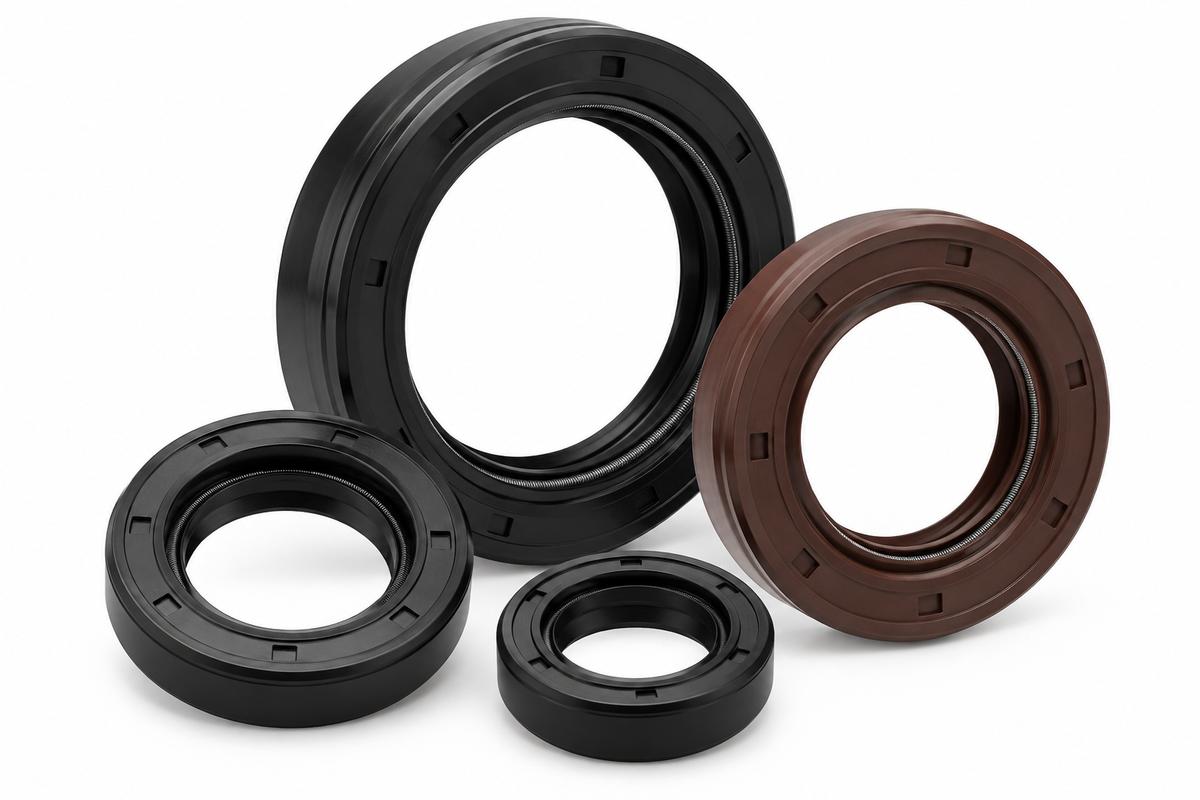
TC-type rotary shaft oil seals.
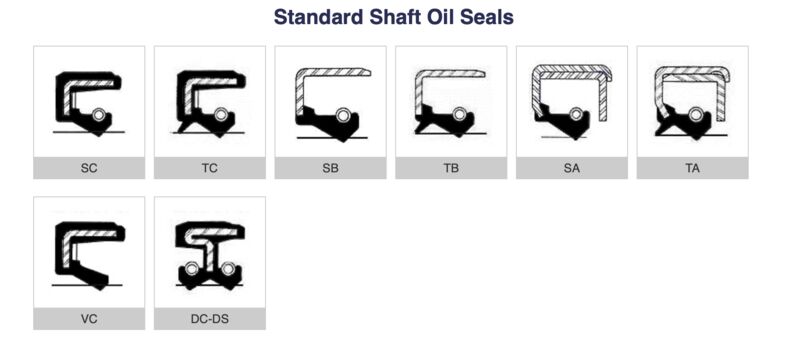
Standard shaft oil seal profiles: SC, TC, SB, TB, SA, TA, VC, and DC-DS types.
Construction
What is an Oil Seal?
An oil seal — also called a rotary shaft seal, grease seal, or shaft seal — is a device used to close the gap between a rotating shaft and a stationary housing. Its primary function is twofold: retain lubricant (oil or grease) inside the housing while preventing contaminants such as dirt, dust and moisture from entering.
The seal consists of three main components:
- Sealing lip: Made of elastomer (NBR, FKM, or HNBR), this is the dynamic sealing element that rides against the rotating shaft under controlled radial load.
- Metal case (reinforcement): A stamped steel or stainless-steel shell that provides structural rigidity and allows press-fitting into the housing bore.
- Garter spring: A helical spring encircling the lip that maintains consistent radial force against the shaft, compensating for lip wear, shaft eccentricity, and thermal changes.
Types
Oil Seal Design Types
TC — Double Lip, Metal Case
The most common industrial type. Primary lip seals lubricant; secondary (dust) lip excludes contaminants. Metal outer case for press-fit into housing bore.
TB — Single Lip, Metal Case
Single sealing lip without dust lip. Used where contamination is not a concern or where a separate dust seal is installed.
SC — Double Lip, Rubber Covered OD
Rubber-covered outside diameter provides a secondary static seal between the seal and the housing bore, compensating for bore surface finish imperfections.
SB — Single Lip, Rubber Covered OD
Single lip with rubber-covered OD. Used where only lubricant retention is required with an imperfect housing bore finish.
VC — Double Lip, Fully Rubber Covered
Fully enclosed rubber construction with metal reinforcement inside. Maximum protection against corrosion of the metal case and better bore sealing.
KC — Double Lip with External Metal Case
External metal case design for applications requiring higher bore retention force.
Lip Design
Single Lip vs Double Lip
| Feature | Single Lip | Double Lip |
|---|---|---|
| Lubricant retention | Yes | Yes |
| Dust/contaminant exclusion | No (separate seal required) | Yes (built-in dust lip) |
| Friction | Lower | Slightly higher |
| Grease packing | Not applicable | Grease packed between lips recommended |
| Typical use | Clean environments | General industrial / dusty environments |
Materials
Oil Seal Lip Materials
| Material | Temperature Range | Best For |
|---|---|---|
| NBR (Nitrile) | −40 °C to +120 °C | Mineral oils, greases — general purpose |
| FKM (Viton®) | −20 °C to +200 °C | Synthetic oils, high-temperature, chemical exposure |
| HNBR | −30 °C to +150 °C | Higher heat / abrasion than NBR, automotive timing |
| Silicone (VMQ) | −60 °C to +200 °C | Wide temperature range, low-speed shafts |
| PTFE | −200 °C to +260 °C | Chemical resistance, dry running, food/pharma |
| ACM | −30 °C to +150 °C | Automotive ATF, engine oil at higher temperatures |
Related