
Material
Poly Acrylic Rubber (ACM)
Poly acrylic rubber offers excellent resistance to heat, hydrocarbon oils, oxidation and ozone, at the cost of poor resistance to water, steam, acids and alkalis.
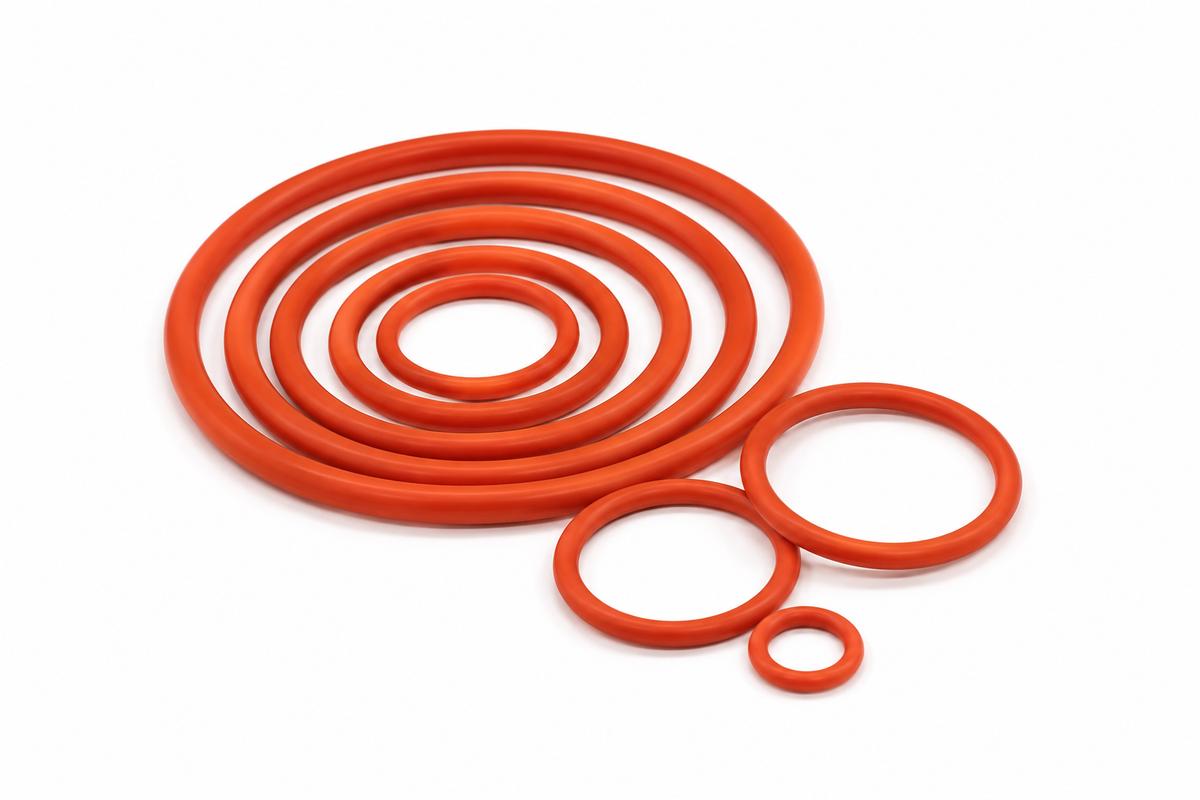
ACM (Poly Acrylic Rubber) seals for automotive transmissions.
Applications
Where it's used
Automotive transmission and engine seals where hot-oil resistance matters more than water exposure.
Related
Also see
 Material
NBR (Nitrile / Buna-N)
NBR is the workhorse elastomer of the sealing industry — a copolymer of butadiene and acrylonitrile whose acry…
View details →Material
FKM / FPM (Fluoroelastomer)
FKM (often referenced by the trade name Viton) is a fluorine-containing elastomer built for aggressive chemica…
View details →Material
EPDM
EPDM's saturated backbone gives outstanding resistance to ozone ageing, UV and weathering along with strong pe…
View details →Properties
Key advantages of ACM
- Excellent resistance to hot lubricating oils and automatic transmission fluids (ATF)
- Good heat resistance — continuous service up to +150°C
- Superior ozone and UV resistance compared to NBR
- Lower cost alternative to FKM for many automotive applications
- Good flex-fatigue life in dynamic applications
ACM is the OEM-preferred elastomer for automotive transmission and crankshaft oil seals where resistance to hot ATF and engine oils is critical but the full chemical resistance of FKM is not required. FITCO supplies ACM O-rings and shaft seals to automotive OEM and Tier 1 specifications.