Material
Silicone (VMQ)
Silicone rubber (VMQ — Vinyl Methyl Silicone) offers the widest usable temperature range of any common elastomer, from -60 °C to +200 °C in standard grades and up to +300 °C in specialty high-temperature formulations. Its unique silicon–oxygen backbone provides inherent resistance to ozone, UV, weathering and ageing, along with excellent electrical insulating properties and biocompatibility. Silicone is available in FDA 21 CFR 177.2600, USP Class VI, BfR and 3-A Sanitary compliant grades, making it the first choice for food-contact, medical-device and pharmaceutical sealing. It is primarily a static-sealing material — mechanical strength and dynamic wear resistance are comparatively low versus organic rubbers like NBR or FKM.
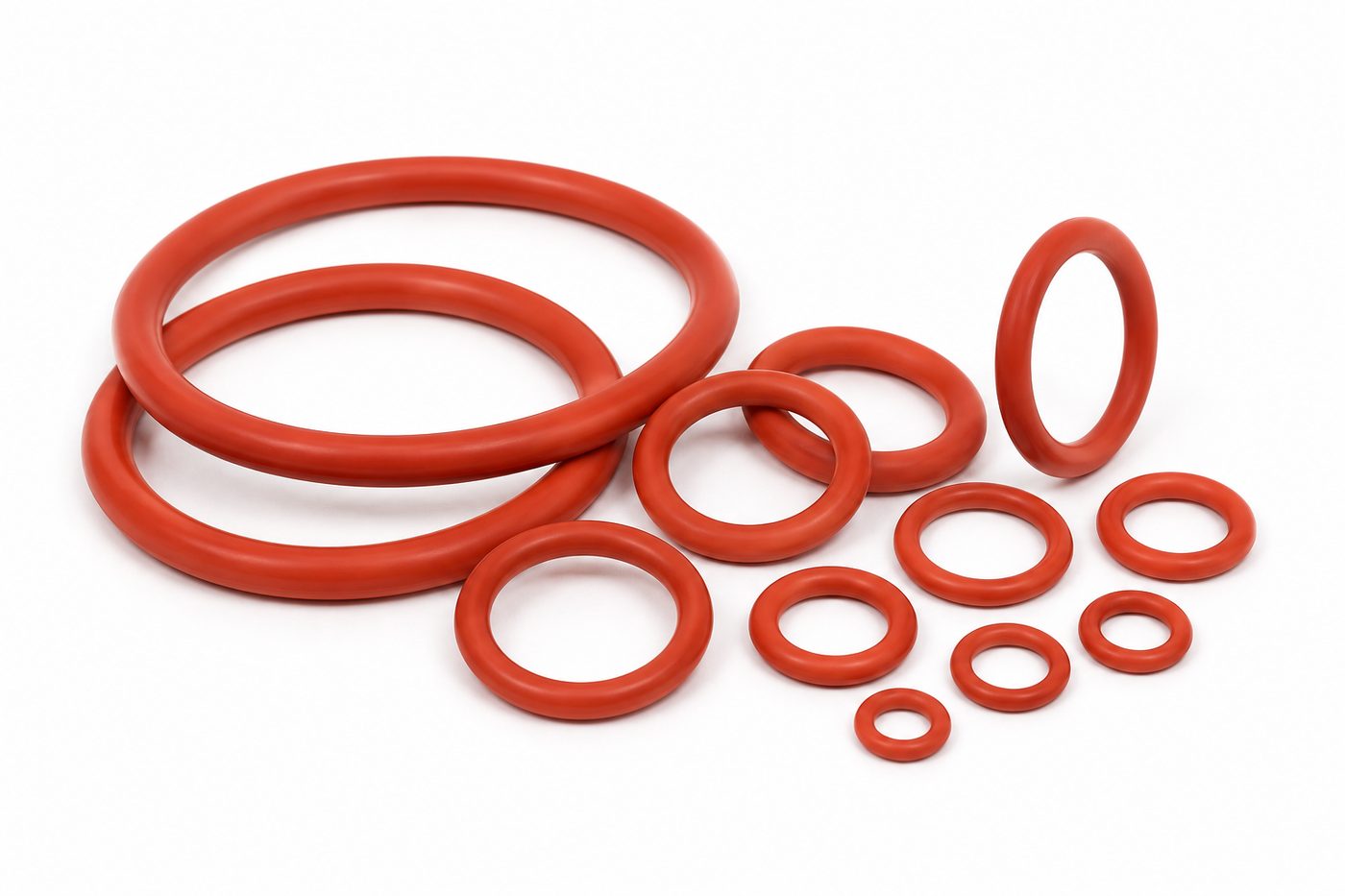
Silicone (VMQ) O-rings in a range of sizes.
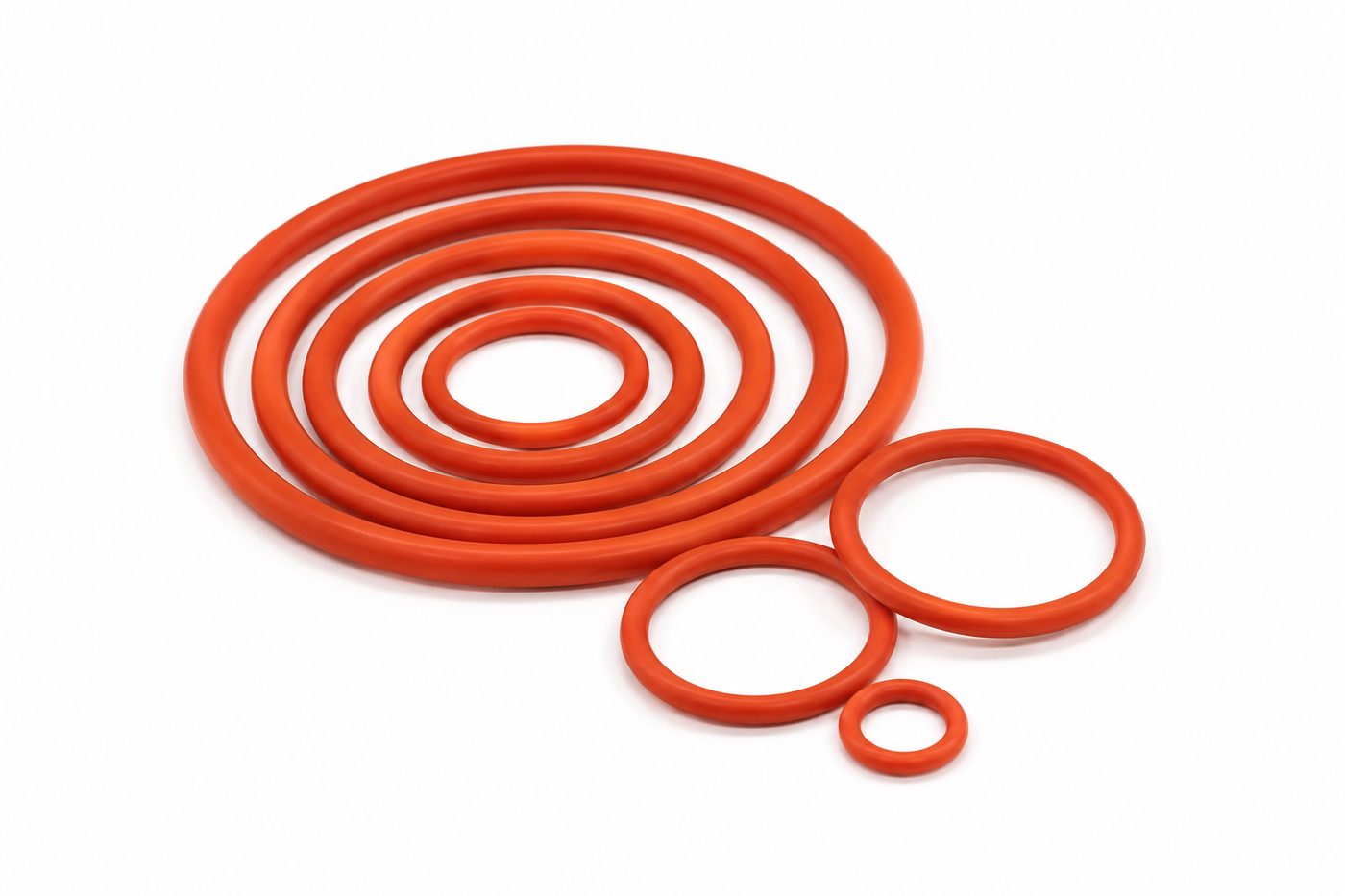
Silicone O-rings, food- and medical-grade compounds.
Silicone types
Understanding silicone rubber grades
Several silicone sub-types exist, each tailored to a specific service envelope. FITCO supplies all common grades and can recommend the best match for your application.
| Designation | Full Name | Temp Range | Key Feature |
|---|---|---|---|
| VMQ | Vinyl Methyl Silicone | -60 to +200 °C | General-purpose, best cost-to-performance ratio |
| PVMQ | Phenyl Vinyl Methyl Silicone | -100 to +200 °C | Extended low-temperature flexibility (aerospace, cryogenic) |
| FVMQ | Fluorosilicone | -55 to +200 °C | Fuel and oil resistance added to silicone's temperature range |
| LSR | Liquid Silicone Rubber | -50 to +200 °C | Injection-moulded, high precision, ideal for high-volume medical parts |
Advantages
Why choose silicone O-rings
Widest Temperature Range
Continuous service from -60 °C to +200 °C (PVMQ to -100 °C, specialty grades to +300 °C) — no other common elastomer matches this span, making silicone ideal for applications with extreme thermal cycling.
Food & Medical Compliance
Readily available in FDA 21 CFR 177.2600, USP Class VI, BfR, 3-A Sanitary and NSF/ANSI 51 grades — the default choice for food-contact, pharmaceutical, medical-device and potable-water seals.
Weather, Ozone & UV Resistance
The silicon–oxygen backbone is inherently inert to ozone, ultraviolet light and weathering. Silicone seals last decades in outdoor or exposed environments without cracking or degradation.
Electrical Insulation
Outstanding dielectric properties across the full temperature range, making silicone the preferred sealing material for electrical connectors, sensor housings, LED assemblies and high-voltage insulators.
Low Compression Set
Silicone maintains elastic recovery even after long-term compression at elevated temperatures — compression set of 15–30 % at 150 °C ensures reliable static sealing over extended service intervals.
Colour & Translucency Options
Available in virtually any colour including translucent and white, enabling colour-coded identification on production lines and meeting aesthetic requirements in consumer and medical products.
Limitations
Where silicone is not recommended
Low Tear & Abrasion Resistance
Silicone's tensile strength (~7 MPa) and tear resistance are substantially lower than NBR, FKM or HNBR. It is best suited for static seals; dynamic or high-friction applications will cause rapid wear.
Petroleum Fuels & Oils
Standard VMQ swells and degrades in petroleum-based fuels, hydrocarbon oils and many non-polar solvents. Where fuel or oil contact is expected, fluorosilicone (FVMQ) or FKM should be considered.
Concentrated Acids & Alkalis
Strong mineral acids and concentrated caustic solutions attack silicone rubber. Mild acids and dilute alkalis are generally acceptable — consult FITCO's chemical compatibility guide for specific media.
Steam Above 150 °C
While silicone tolerates dry heat to 200 °C+, prolonged exposure to pressurised steam above 150 °C can cause reversion (softening). EPDM or FFKM are better choices for high-pressure steam service.
Applications
Where silicone seals are used
Food & Beverage
Dairy equipment, brewing and bottling lines, beverage dispensers, baking ovens, food-processing machinery — FDA-grade silicone O-rings withstand CIP cleaning cycles and wide temperature swings without imparting taste or odour.
Medical & Pharmaceutical
Surgical instruments, drug-delivery devices, ventilators, blood-handling equipment, sterile packaging. USP Class VI-compliant silicone provides biocompatibility and resistance to autoclave sterilisation.
Automotive & Aerospace
Turbocharger hose connectors, sensor housings, lighting assemblies, EV battery-pack seals. Aerospace uses PVMQ grades for extreme low-temperature flexibility in fuel systems and environmental controls.
Electronics & Lighting
LED lens gaskets, connector seals, display bezels, outdoor enclosure gaskets — silicone's electrical insulation, UV stability and wide operating temperature make it the standard for electronics sealing.
Available as
O-rings & products in this material
 O-Ring Standard
AS568 O-Rings
AS568 (Aerospace Size Standard 568) defines the inch-based dash-numbered O-ring sizes used as the de-facto glo…
View details →O-Ring Standard
Metric O-Rings
Metric O-rings are specified by inside diameter and cross-section in millimetres and are the default on Europe…
View details → O-Ring Standard
ISO 3601 O-Rings
ISO 3601-1 defines metric O-ring dimensions and tolerance classes (Class A/B) and ISO 3601-2 defines gland dim…
View details →O-Ring Standard
Custom O-Rings
Where a standard AS568, metric or ISO 3601 size does not fit the application, FITCO produces custom O-rings to…
View details →