Home/Products/Wiper / Dust Seals

Product

Wiper / Dust Seals

A wiper (dust) seal is fitted at the very outer end of the cylinder head, ahead of the rod seal, and scrapes contamination off the piston rod's surface every time it retracts back into the cylinder.
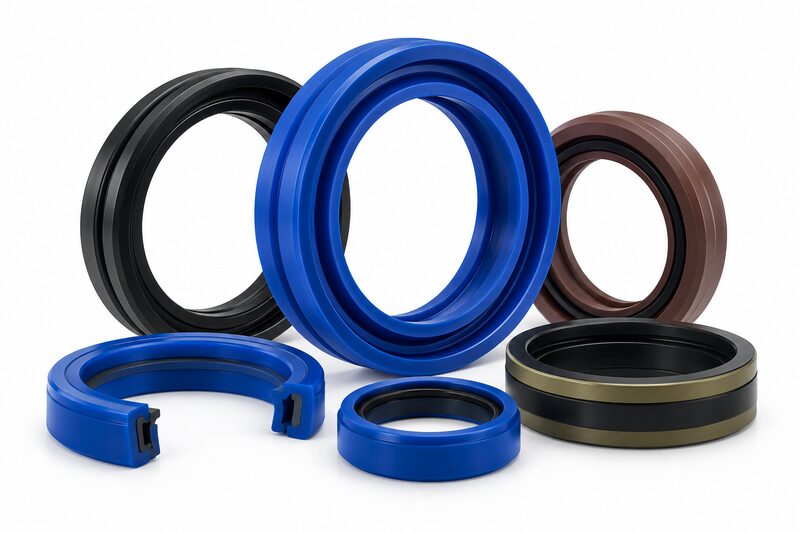
FITCO hydraulic and pneumatic seals
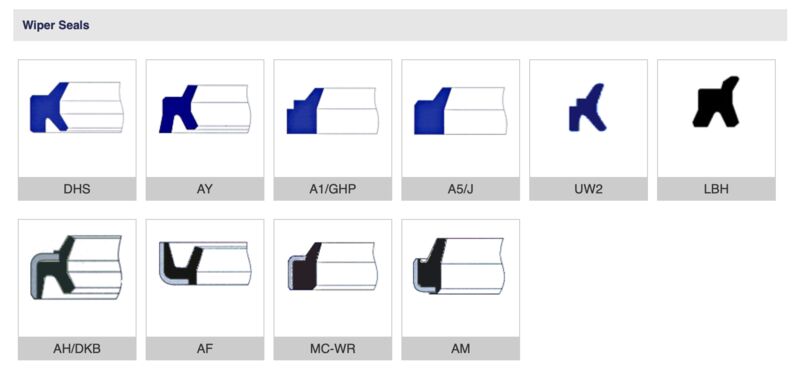
Wiper seal profiles - DHS, AY, GHP, LBH, DKB types

Wiper seal profiles: DHS, AY, A1/GHP, A5/J, UW2, LBH, AH/DKB, AF, MC-WR, and AM types.

Overview

How it works

As a piston rod extends outside the cylinder it picks up dirt, moisture and abrasive grit from the surrounding environment. If that contamination were carried back in on the next stroke, it would be dragged straight across the rod seal, scoring the rod surface and accelerating rod-seal wear. The wiper's job is purely defensive — it protects everything behind it rather than sealing hydraulic pressure itself, so its lip geometry is optimised for scraping efficiency rather than pressure holding.

Profiles

Available profiles

Profile

WR1

Standard single-lip wiper profile for general-duty cylinders.

Profile

UW1 / UW2

U-cup-style double-function wiper profiles for heavier contamination.

Profile

MC-UM / MC-WR

Metal-cased wiper variants for press-fit housing applications.

Materials

Which compound, and why

Material

Polyurethane (PU)

The default wiper-lip material — abrasion resistance to survive repeated scraping duty.

Material

NBR

Lower-cost option for lighter-contamination, lower-speed applications.

Applications

Where used

Fitted at the rod-side end of hydraulic and pneumatic cylinder heads across mobile, construction and industrial equipment operating in dirty or abrasive environments.

How Wiper Seals Work

A wiper seal (also called a scraper or dust seal) is the outermost seal in a hydraulic cylinder gland assembly. Its primary function is to scrape contaminants — dirt, dust, moisture, ice and abrasive particles — off the piston rod surface before they can enter the cylinder and damage the rod seal, piston seal and cylinder bore. Without an effective wiper seal, contaminant ingress is the leading cause of premature hydraulic cylinder failure.

Wiper seals operate under atmospheric pressure and do not need to retain system pressure. However, they must maintain lip contact with the rod across its full stroke, accommodate rod misalignment and side loads, and resist damage from sharp-edged contaminants. The wiper lip geometry must be aggressive enough to remove particles but not so tight that it strips the lubricating oil film that the rod seal deliberately leaves on the rod surface.

Wiper Seal Profiles

DHS type wipers feature an integrated metal insert for high rigidity and resistance to blow-out, making them suitable for heavy-duty mobile applications. LBH type wipers have a snap-in design with a flexible lip for easy installation and reliable performance in standard industrial cylinders. AH/DKB type dual-function wipers combine a wiper lip with a low-pressure sealing lip, providing contamination exclusion and secondary pressure retention in a single element.

For extreme environments — mining, steel mills, offshore platforms — double-lip wiper seals with metal reinforcement and high-temperature FKM compounds provide the most robust contamination barrier. In food processing and pharmaceutical applications, FDA-compliant EPDM or silicone wiper seals prevent product contamination while excluding washdown water.

Installation and Maintenance

Wiper seals are press-fitted into the cylinder head bore with an interference fit. Correct groove dimensions are critical — an oversized groove allows the wiper to shift under contaminant load, while an undersized groove over-compresses the lip and accelerates wear. Rod surface finish of Ra 0.1–0.3 µm is essential; a rough or damaged rod surface will rapidly destroy the wiper lip. Regular visual inspection of the rod surface for scoring, corrosion or contamination buildup is the simplest indicator of wiper seal condition.

📐 Wiper Seal Size Chart Request a Quote

Get a quote on your O-ring or sealing requirement

Send drawings, sizes, materials or an existing part number — our engineering team will respond with pricing, lead time and technical guidance.

Request a Quote Browse Technical Resources