Home/Products/Pneumatic Seals

Product

Pneumatic Seals

Pneumatic seals do the same jobs as hydraulic rod and piston seals — but for compressed-air cylinders, where the sealed medium is air rather than oil and the seal has to run at much lower friction to avoid stick-slip and breakout-force problems.
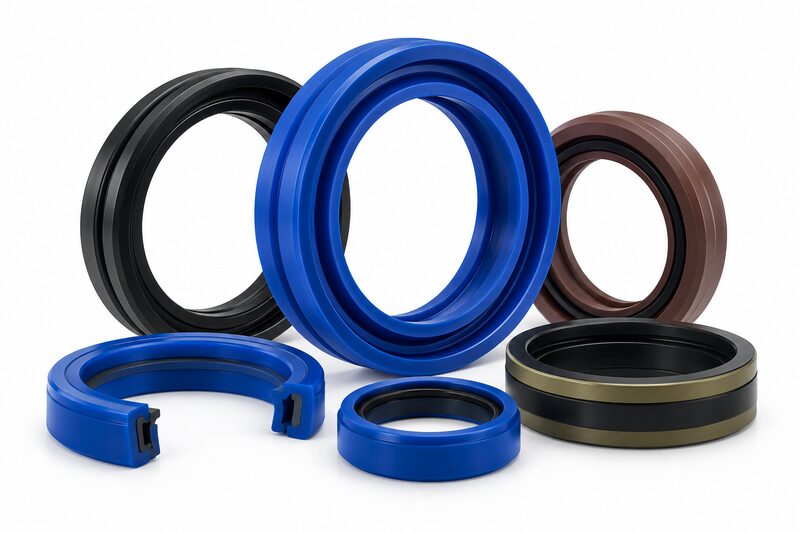
FITCO hydraulic and pneumatic seals
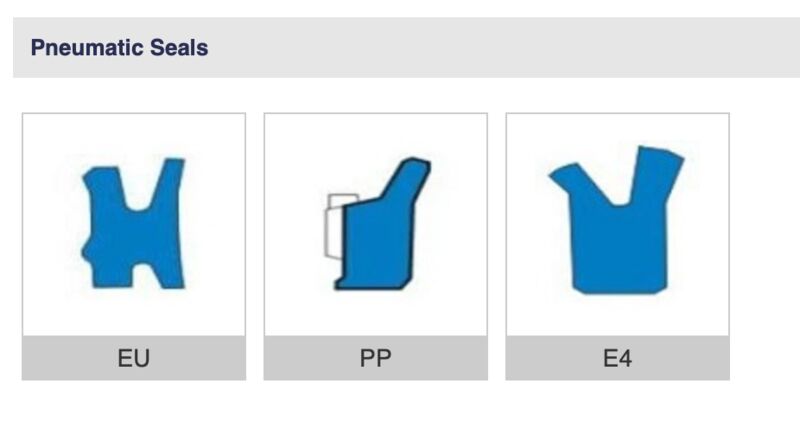
Pneumatic seal profiles - EU, PP, E4 types

Pneumatic seal profiles: EU, PP, and E4 types.

Overview

How pneumatic duty differs from hydraulic

Compressed air doesn't lubricate a seal the way hydraulic oil does, so pneumatic seal profiles and compounds are chosen specifically for low friction and the ability to run dry or with only minimal lubrication, often at higher cycle speeds than an equivalent hydraulic seal would see. This is why pneumatic seal materials differ from hydraulic ones even though the seal functions — piston, rod, wiper — are the same.

Product types

Pneumatic sealing range

Type

Piston Seals

Low-friction piston seals for pneumatic actuator bores.

Type

Rod Seals

Rod seals sized for pneumatic cylinder rod diameters and speeds.

Type

U-Cups / O-Rings

Standard U-cup and O-ring sealing elements for compact pneumatic cylinders.

Materials

Which compound, and why

Material

NBR

The standard pneumatic seal compound at moderate speed and temperature.

Material

Polyurethane (PU)

Higher wear resistance for longer cycle life in higher-speed pneumatic duty.

Applications

Where used

Compressed-air cylinders and actuators across automation, packaging and general pneumatic machinery.

How Pneumatic Seals Differ from Hydraulic Seals

Pneumatic seals operate in compressed air systems at pressures typically between 2 and 10 bar, far lower than hydraulic pressures. However, pneumatic applications present unique challenges: the sealing medium (air) provides no lubrication, so the seal material must have inherently low friction. Pneumatic cylinders operate at higher speeds — up to 1.5 m/s compared to 0.5 m/s typical for hydraulic cylinders — and the compressibility of air makes smooth, controlled motion more difficult to achieve. Stick-slip behaviour at low speeds is a common problem with poorly selected pneumatic seals.

Unlike hydraulic seals which rely on system pressure to energise the lip, pneumatic seals must provide effective sealing at very low pressures (below 1 bar) during the initial phase of cylinder stroke. This requires careful lip geometry design and appropriate pre-load to ensure contact at all operating pressures.

Pneumatic Seal Types

EU type piston seals are the standard pneumatic piston seal, featuring a symmetrical U-cup profile in polyurethane for low friction and long life. PP type seals use a composite PTFE and rubber design for applications requiring extremely low breakaway friction and smooth motion control. E4 type pneumatic rod seals provide reliable low-pressure sealing with minimal friction for pneumatic cylinder rod glands.

For clean-room and food-grade pneumatic applications, FITCO supplies seals in FDA-compliant materials including medical-grade silicone and white polyurethane. All pneumatic seals are manufactured without silicone-based lubricants for applications in automotive painting and coating lines where silicone contamination must be avoided.

Applications

Pneumatic seals are used in air cylinders for factory automation, packaging machines, material handling, printing presses, textile machinery, woodworking equipment, and robotic actuators. They are also used in pneumatic tools, air brakes for commercial vehicles, door operators for buses and trains, and pneumatic clamping fixtures in CNC machining centres.

📐 Pneumatic Seal Size Chart Request a Quote

Get a quote on your O-ring or sealing requirement

Send drawings, sizes, materials or an existing part number — our engineering team will respond with pricing, lead time and technical guidance.

Request a Quote Browse Technical Resources